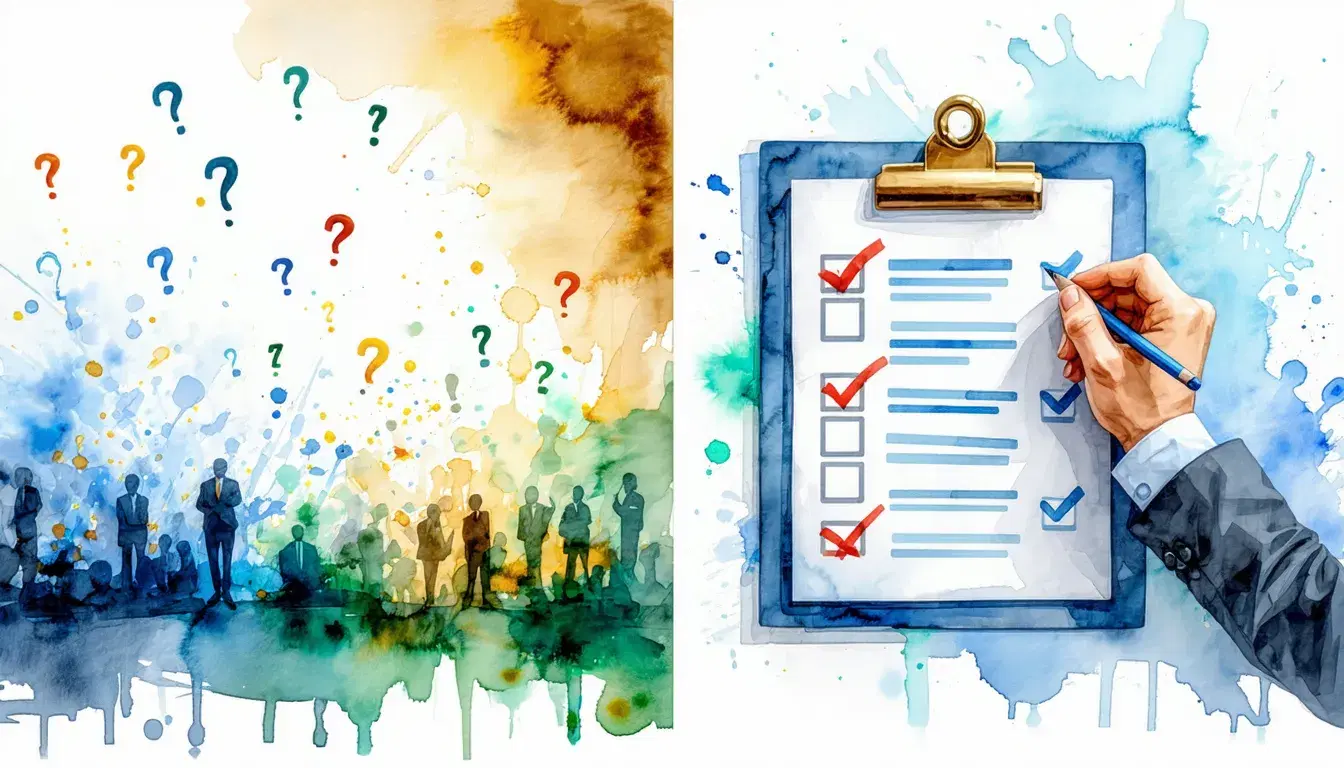
Interview anxiety usually isn't about skill. It's about unpredictability. When every interviewer asks different questions and scores them differently, candidates can't prepare and employers can't compare.
SHRM's guidance is direct: standardized questions and scoring systems deliver consistency and reduce bias across candidates. Candidates get a clearer target, employers get cleaner decisions.
For candidates, the trick is three stories and one shape.
If you're unemployed or underemployed, an interview can feel like your one shot. Take the randomness out by reusing a structure you already know.
Pick three stories you can adapt to almost any role:
- Impact: a measurable result you drove.
- Pressure: a hard moment and how you handled it.
- Learning: a mistake, what changed afterwards, and how it turned out.
Then answer most questions with the same shape: context → action → result → reflection.
It travels across industries:
- Marketing: diagnose a funnel dip, run the experiment, report what happened.
- Sales: qualify, handle the objection, move the deal forward.
- IT: debug, test, deploy, and cut the repeat incidents.
- Electrical engineering: troubleshoot safely, document it, prevent the next one.
SkillStamp's assessment flow gives you practice at this: a short recorded introduction (or a written alternative) and a 15-minute live interview with standardized scoring. The report at the end covers communication style, motivation and fit, and development recommendations.
For employers, a scorecard is what stops vibes hiring.
When teams feel uncertain, they usually add interview rounds. Sharpening each round into a structured measurement gets you there faster.
A simple scorecard approach:
- Choose 6 competencies at most: role skill, problem solving, communication, collaboration, initiative, reliability.
- Ask two questions per competency, the same two for every candidate.
- Rate 1–5, with anchors describing what "good" looks like.
That lines up with SHRM's structured interview guidance and makes candidates genuinely comparable. Now add evidence from before the interview. In SkillStamp's employer flow every candidate goes through the same assessment steps and employers get everything in one document, so the decision rests on comparable signals instead of gut feel.